Imagine discovering a traumatic scene in your Milwaukee home or workplace—bloodstains, potential hazards lurking in every corner. The thought alone is chilling, but the real danger lies in bloodborne pathogens like HIV, hepatitis B, and hepatitis C, which can linger and pose severe health risks if not handled properly. As a leading provider in the area, Milwaukee Trauma Cleanup understands the urgency of safe remediation. In this comprehensive guide, we’ll dive into OSHA’s critical rules for bloodborne pathogen removal, tailored to the unique challenges of trauma cleanup in Milwaukee. Whether you’re a property owner in Riverwest or a business manager in West Allis, knowing these regulations can protect you and your loved ones.
Understanding Bloodborne Pathogens and Their Risks
Bloodborne pathogens are microorganisms in human blood and bodily fluids that can cause disease in humans. In trauma situations—such as accidents, unattended deaths, or violent incidents—these pathogens can contaminate surfaces, making cleanup a high-stakes operation.
What Are Bloodborne Pathogens?
These include viruses like HBV (hepatitis B virus), HCV (hepatitis C virus), and HIV. They spread through contact with infected blood via cuts, mucous membranes, or contaminated objects. In Milwaukee, where urban density can amplify exposure risks, improper handling during cleanup can lead to outbreaks or legal liabilities.
OSHA, the Occupational Safety and Health Administration, mandates strict protocols to mitigate these dangers. Their Bloodborne Pathogens Standard (29 CFR 1910.1030) applies to all employers with potential occupational exposure, including cleanup crews and even property managers overseeing remediation.
For specialized services like blood spill cleanup, professional intervention is key to avoiding DIY mishaps that could violate these rules.
Key OSHA Regulations for Safe Removal
OSHA’s framework is designed to prevent exposure through engineering controls, work practices, and personal protective equipment (PPE). Compliance isn’t optional—it’s a legal requirement that can save lives and shield you from fines up to $14,502 per violation.
Exposure Control Plans: The Foundation of Safety
Every organization must develop an Exposure Control Plan (ECP), a written document outlining how exposure will be minimized. This includes identifying tasks with risk, like cleaning unattended death cleanup sites, and scheduling regular training.
In Milwaukee, where cold winters can preserve pathogens longer on surfaces, an effective ECP might specify using EPA-approved disinfectants suited to our humid summers and snowy conditions.
Universal Precautions and Engineering Controls
OSHA requires treating all blood and bodily fluids as infectious—universal precautions in action. Engineering controls like biohazard containers and sharps disposal units prevent direct contact.
For instance, during pathogen decontamination, self-sheathing needles and puncture-resistant sharps containers are non-negotiable. In areas like Waukesha, where rural properties might delay professional response, having these on hand can bridge the gap until experts arrive.
Step-by-Step Procedures for Safe Bloodborne Pathogen Removal
Following OSHA guidelines ensures methodical, safe removal. Here’s a practical breakdown for trauma scenes.
Initial Assessment and Isolation
First, isolate the area to prevent unauthorized access. In a Milwaukee apartment in South Milwaukee, cordon off the space with warning signs and restrict entry. Assess the extent of contamination—visible blood, porous materials like carpets that absorb fluids.
If you’re not certified, stop here and call professionals. Milwaukee Trauma Cleanup’s team, serving neighborhoods like Greenfield, uses OSHA-compliant protocols from the start.
Personal Protective Equipment (PPE) Requirements
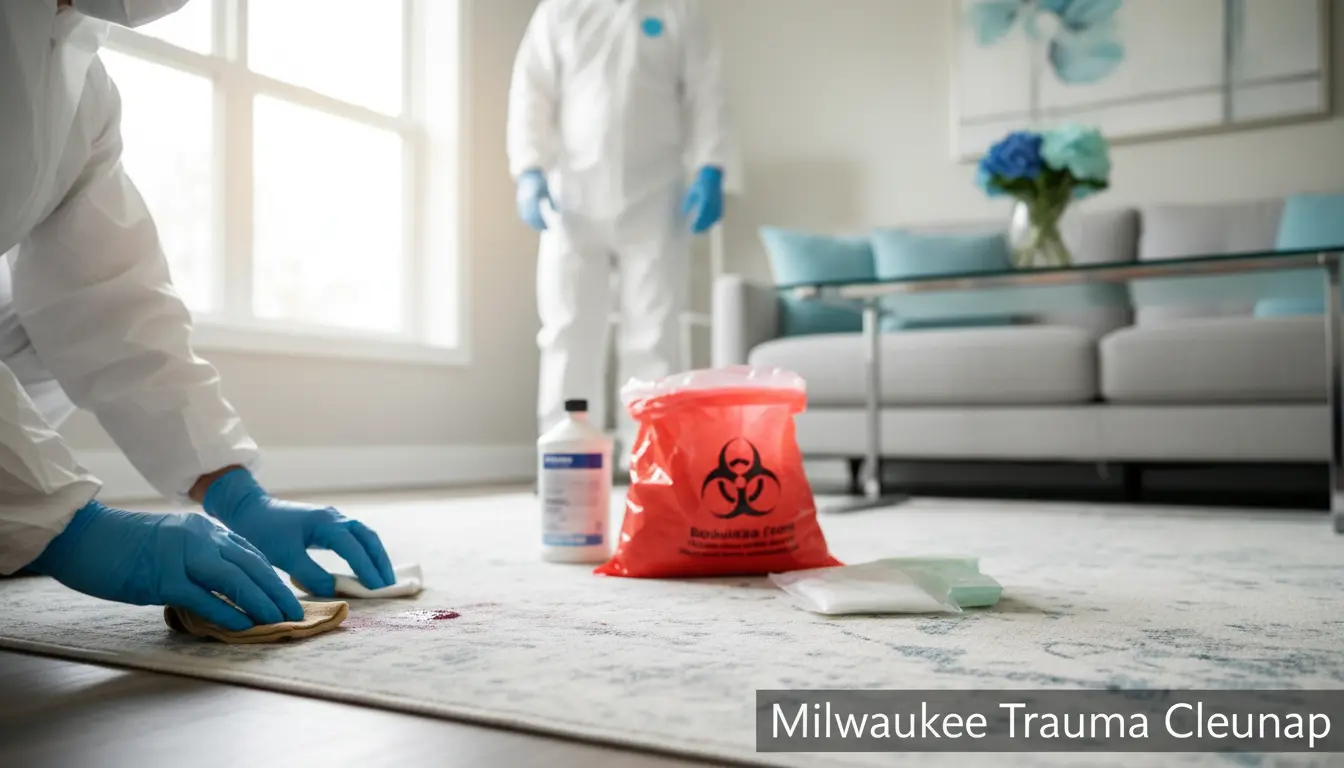
Don full PPE: gloves, gowns, face shields, and respirators. OSHA mandates that PPE be task-specific; for aerosol-generating activities, N95 masks are essential.
Practical tip: Inspect PPE for tears before use. In high-risk homicide scene decontamination, layering protection adds an extra safeguard against splashes.
Cleaning and Disinfection Process
-
Remove Visible Soil: Use disposable absorbent materials to soak up liquids. Never use cloth towels—they harbor pathogens.
-
Disinfect Surfaces: Apply a 10% bleach solution or EPA-registered disinfectant, letting it sit for 10 minutes. For non-porous surfaces in Milwaukee’s older homes, this kills 99.9% of pathogens.
-
Handle Waste Properly: Double-bag biohazardous waste and label with biohazard symbols. Transport to facilities offering EPA compliant disposal, ensuring no environmental contamination in our Lake Michigan watershed.
Actionable advice: In humid Milwaukee climates, dry areas thoroughly post-cleanup to prevent mold, which can compound health issues.
Decontamination of Tools and Post-Cleanup
Wash reusable tools with detergent, then disinfect. Document everything—OSHA requires records of training, vaccinations (like hepatitis B shots), and incident reports.
For properties in Riverwest, where community ties run deep, thorough documentation reassures tenants and maintains property value.
Practical Tips for Milwaukee Property Owners
Milwaukee’s diverse landscapes—from bustling downtown to quiet suburbs like West Allis—mean tailored approaches. If you encounter a bloodborne incident:
-
Act Quickly: Pathogens thrive in our variable weather. Contact Milwaukee Trauma Cleanup at (414) 221-7950 for rapid response.
-
Avoid Common Mistakes: Don’t vacuum blood spills—it aerosolizes particles. Instead, use wet methods.
-
Train Your Team: If managing rentals in Waukesha, provide OSHA-approved training. Resources are available via local health departments.
-
Local Compliance: Milwaukee’s Department of Neighborhood Services may require permits for large cleanups. Pair this with professional pathogen decontamination to stay ahead.
In areas like South Milwaukee, where waterfront properties pose unique disposal challenges, opt for certified services to navigate regulations seamlessly.
FAQ: Common Questions About OSHA Rules and Bloodborne Pathogen Removal
1. Do I Need OSHA Training for Home Cleanup?
OSHA standards primarily target workplaces, but for safety, follow them at home. For professional results, hire certified teams like Milwaukee Trauma Cleanup, especially in high-exposure scenarios.
2. What If I Suspect Exposure During Cleanup?
Seek medical attention immediately. Post-exposure prophylaxis (PEP) can prevent infection if started within 72 hours. Document the incident for OSHA reporting if applicable.
3. How Often Should I Review My Exposure Control Plan?
Annually, or whenever tasks change. In Milwaukee’s evolving urban environment, updates ensure relevance to local hazards.
4. Are There Specific Rules for Outdoor Trauma Scenes?
Yes, contain runoff to prevent environmental spread. In Greenfield parks or streets, use tarps and absorbents, then dispose via EPA methods.
5. Can DIY Cleaners Replace Professional Services?
For minor spills, yes—but for trauma, no. Professionals ensure full OSHA compliance and thorough removal, reducing liability.
Conclusion: Prioritize Safety with Expert Help in Milwaukee
Navigating OSHA rules for bloodborne pathogen removal is crucial for health and legal protection in Milwaukee’s trauma-prone settings. From the industrial echoes of West Allis to the vibrant streets of Riverwest, incidents happen— but with knowledge and pros like Milwaukee Trauma Cleanup, you can restore safety swiftly.
Don’t risk exposure or violations. Contact Milwaukee Trauma Cleanup today at (414) 221-7950 for compliant, compassionate service. Serving all of Milwaukee and beyond, we’re here to handle the hazmat so you don’t have to. Schedule your consultation now and reclaim your peace of mind.