Losing a loved one to suicide is an unimaginable tragedy that leaves families in Milwaukee grappling with profound grief and overwhelming practical challenges. The aftermath, including the cleanup of the scene, can intensify the trauma, turning a private space into a place of haunting memories. At Milwaukee Trauma Cleanup, we understand the delicate balance between emotional healing and necessary action. As local experts serving the greater Milwaukee area, we’ve helped countless families navigate this heartbreaking process with compassion and efficiency.
This guide offers practical, expert tips tailored for families facing suicide cleanup. We’ll cover safety protocols, emotional considerations, step-by-step guidance, and when to seek professional help. Whether you’re in Greenfield or Waukesha, remember: you’re not alone. Handling this sensitively is crucial, and professional services like ours can alleviate the burden, allowing you to focus on healing.
Understanding the Emotional Weight of Suicide Cleanup
Suicide cleanup isn’t just about physical restoration—it’s deeply intertwined with emotional recovery. Families often feel a mix of shock, guilt, and numbness, making even simple decisions feel insurmountable. In Milwaukee’s close-knit communities, where support networks are strong but stigma lingers, addressing these feelings early is vital.
Prioritizing Mental Health Support
Before touching anything at the scene, ensure family members have access to counseling. Reach out to local resources like the Milwaukee County Behavioral Health Division or national hotlines such as the 988 Suicide & Crisis Lifeline. Delaying emotional support can prolong trauma, so encourage open conversations. As experts, we recommend involving a grief counselor familiar with Milwaukee’s resources to guide your family through this.
Setting Boundaries for Family Involvement
Not everyone in the family should participate in the cleanup. Designate a point person to coordinate efforts, sparing siblings or elderly relatives from the distress. This approach respects individual coping mechanisms and prevents further emotional strain.
Safety First: Protecting Yourself and Your Home
Suicide scenes pose serious biohazard risks due to bloodborne pathogens, bodily fluids, and potential chemical exposure from methods used. In Milwaukee’s variable weather, where humidity can accelerate bacterial growth, immediate action is essential to prevent health hazards.
Personal Protective Equipment (PPE) Essentials
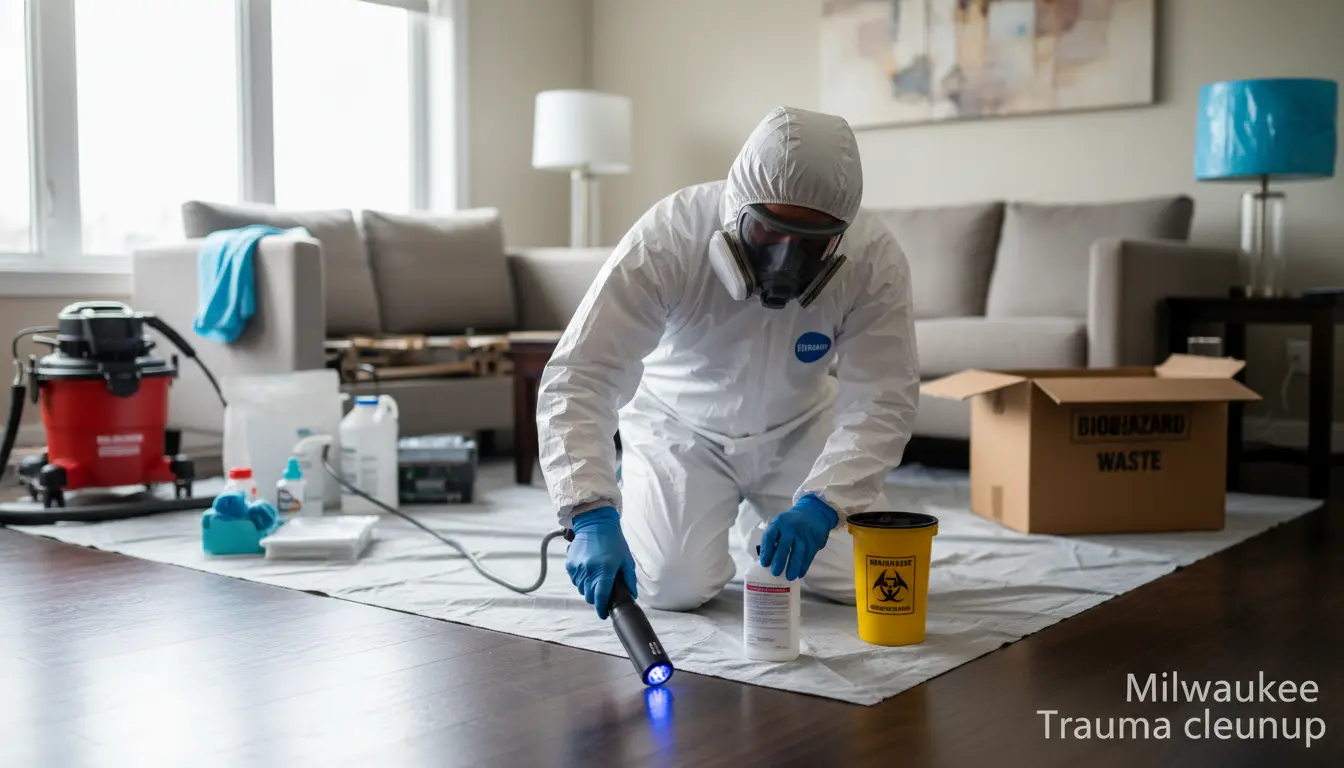
Never enter the scene without proper gear. Start with gloves, masks (N95 or higher), goggles, and full-body suits if available. These items are non-negotiable for avoiding infections like hepatitis or HIV. For families in Glendale, where residential areas are dense, containing contaminants is especially critical to protect neighbors.
Assessing and Securing the Area
Isolate the room immediately—lock doors, post warning signs, and restrict access. Turn off HVAC systems to prevent airborne spread. If the incident involved firearms or chemicals, evacuate and call authorities. Document the scene with photos for insurance or legal purposes, but avoid sharing sensitive details.
Step-by-Step Guide to Suicide Cleanup
While professionals handle complex cases, families may need to manage initial steps. Approach this methodically to minimize risks and restore the space.
Initial Scene Assessment
Ventilate the area by opening windows (weather permitting in Milwaukee’s seasons) and using fans to direct air outward. Identify visible biohazards like blood pools or tissue matter. If the volume is extensive, stop and call experts—don’t risk exposure.
Cleaning Blood and Bodily Fluids
Use absorbent materials like cat litter or commercial biohazard powders to solidify liquids before removal. Double-bag waste in heavy-duty, leak-proof bags labeled as biohazard. For surfaces, apply a 10% bleach solution (1 part bleach to 10 parts water) after removing debris, letting it sit for 10-15 minutes. Avoid mixing cleaners, as fumes can be toxic. In homes around New Berlin, where basements are common, check for seepage into carpets or walls.
Decontaminating Porous vs. Non-Porous Surfaces
Non-Porous Surfaces (Tile, Glass, Metal)
Wipe down with enzyme-based cleaners designed for blood breakdown, followed by disinfection. These products, available at local hardware stores in Milwaukee, ensure thorough neutralization of odors and pathogens.
Porous Surfaces (Carpets, Upholstery, Wood)
These often require professional intervention. Steam cleaning alone won’t suffice; extraction and possible replacement may be needed. For trauma waste disposal, follow EPA guidelines to avoid environmental contamination in our Lake Michigan watershed.
Odor Control and Final Sanitization
Persistent smells indicate incomplete cleaning. Use ozone generators or activated charcoal sparingly, and always follow with HEPA vacuuming. Test for residues with ATP swabs if possible. A final antimicrobial fogging ensures the space is safe for re-entry.
When to Call Professional Trauma Cleanup Services
DIY cleanup has limits—especially with legal requirements for biohazard disposal in Wisconsin. If the scene involves more than minor spills, structural damage, or emotional overwhelm, contact Milwaukee Trauma Cleanup immediately at (414) 221-7950.
Benefits of Hiring Experts
Our team is certified in OSHA standards and uses specialized equipment for thorough decontamination. We handle everything from biohazard waste removal to discreet transport, ensuring compliance with local regulations. Serving areas like Whitefish Bay, we arrive promptly, often within hours, to restore your home compassionately.
Integrating with Other Services
Suicide scenes may overlap with other traumas. If vehicles were involved, explore our vehicle interior decontamination for safe restoration. For industrial or accidental elements, our forensic cleaning experts provide comprehensive solutions.
Legal and Insurance Considerations in Milwaukee
Wisconsin law mandates proper biohazard handling, with fines for improper disposal. Contact your homeowner’s insurance early—many policies cover trauma cleanup. Document everything, including professional invoices, for claims. In Milwaukee County, coordinate with the Medical Examiner’s Office if the scene is active.
FAQ: Common Questions About Suicide Cleanup
1. How soon should suicide cleanup begin?
Ideally within 24-48 hours to prevent decomposition and health risks. Delaying can complicate the process and increase costs.
2. Is suicide cleanup covered by insurance in Milwaukee?
Yes, most policies include it under biohazard or trauma provisions. Milwaukee Trauma Cleanup assists with claims to ease your burden.
3. Can family members safely perform the cleanup themselves?
For minor incidents, yes—with precautions. However, professionals are recommended for safety and thoroughness, especially in sensitive family situations.
4. What if the suicide occurred in a rental property?
Notify your landlord immediately. They may require professional services, and Milwaukee Trauma Cleanup works with property managers across the area.
5. How does Milwaukee Trauma Cleanup ensure discretion?
We use unmarked vehicles and trained staff who respect privacy. Your story stays confidential, allowing families to grieve without added exposure.
Conclusion: Reclaiming Your Space and Starting to Heal
Handling suicide cleanup is a profound act of care, transforming a site of loss into one of renewal. By following these expert tips—from safety measures to emotional support—you empower your family to move forward. In Milwaukee’s resilient communities, healing begins with the right steps and support.
Don’t face this alone. Milwaukee Trauma Cleanup is here to provide compassionate, professional assistance tailored to your needs. Call us today at (414) 221-7950 for a confidential consultation. Let us help you restore peace to your home and heart—because every family deserves a fresh start.
(Word count: approximately 1250)